Performance Over Hype: Reflections from Paris Blockchain Week (Signal Week)
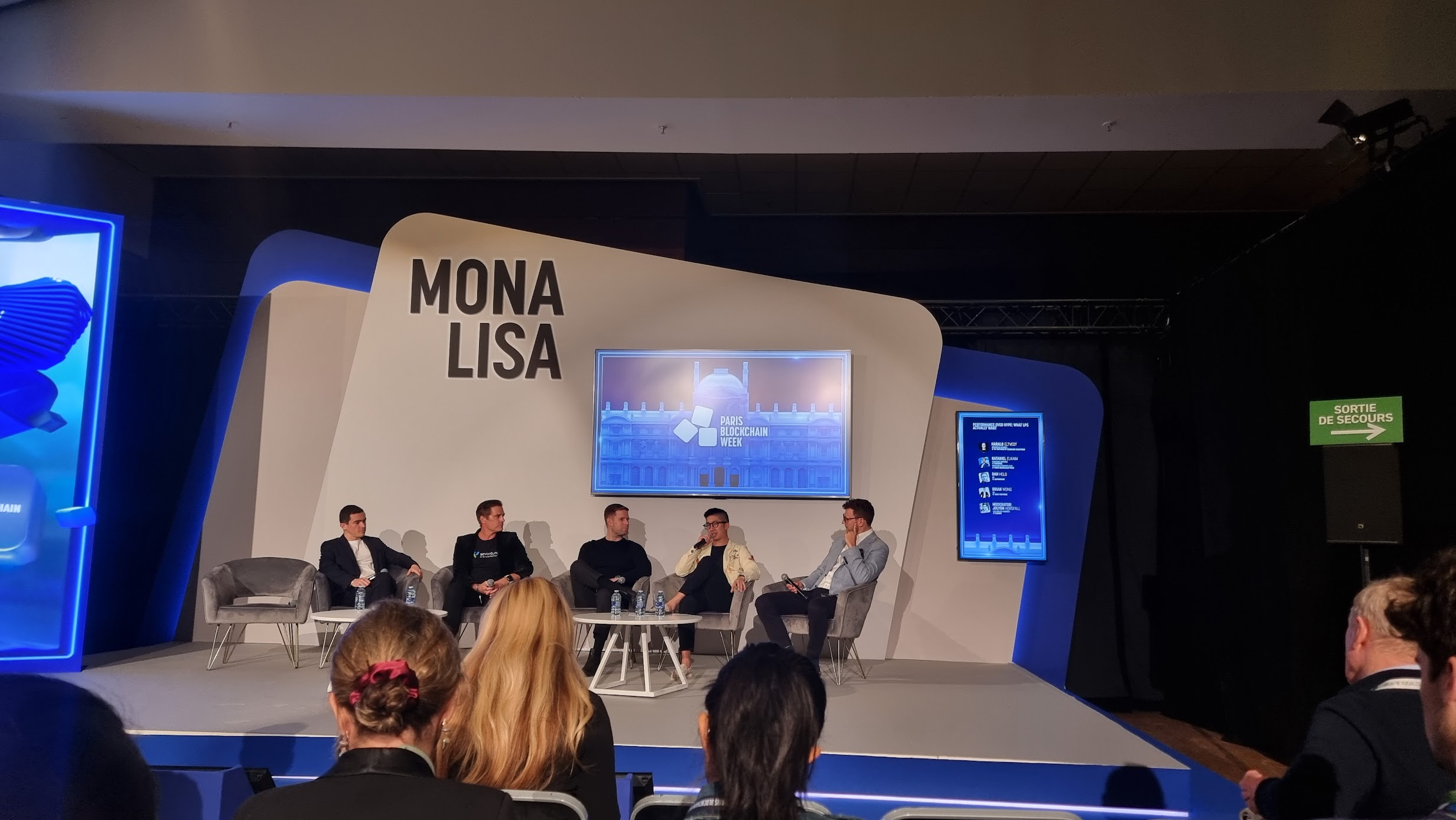
The Panel @ The Mona Lisa (not that Mona Lisa)
The Arrival: From NYC to the Mix
Last week started the way these trips usually do, on a late-night flight out of New York, telling myself I’d sleep more than I actually did. I landed in Paris early, grabbed a quick nap just to reset, and then went straight into the chaos. No real buffer, no slow onboarding, just straight into the energy of Paris Blockchain Week, now rebranded as Signal Week.
And almost immediately, it felt different.
Judging the Next Wave
One of the highlights for me was judging startups from around the world, particularly for the Cardano track. The breadth of ideas was strong, but what stood out wasn’t just quality, it was direction.
A few years ago, most founders in these settings were building toward retail-driven narratives. Token-first thinking, growth loops tied to speculation, products that thrived on volatility. This time, it was the opposite. Nearly every team was focused on institutional adoption. Tokenized real-world assets, on-chain money market funds, infrastructure designed for custodians, exchanges, and banks. These weren’t experiments: they were attempts at integrating into real financial systems.
There was a quiet but clear consensus in the room: retail isn’t the primary driver anymore. The founders knew it, and they were building accordingly.
A big congratulations to Sundial Protocol for winning the Cardano track.
Signal Over Noise
That broader shift is probably why the rebrand to “Signal Week” makes so much sense. The industry isn’t chasing noise right now, it’s trying to interpret where things are actually going.
And despite what markets might suggest from the outside, there was no sense of hesitation on the ground. The event was packed. Not in a euphoric, chaotic way, but in a focused, conviction-driven way. Builders weren’t there chasing hype, they were there executing with intent.
The setting amplified that feeling. Being around the Louvre, surrounded by centuries of cultural dominance and permanence, while discussing the future of financial infrastructure, it felt symbolic. France has long been a global cultural leader, but what’s becoming more evident is its ambition to be a serious player in tech, AI, and crypto. Companies like Ledger and Flowdesk aren’t outliers anymore, they’re signals of a broader ecosystem forming in Europe.
What LPs Actually Want
I also had the chance to speak on a panel titled “Performance over Hype: What LPs Actually Want,” alongside Harald Eltvedt (SC Ventures), Dan Held (The Held Report), Nataniel Elkaim (PBW and V3ntures), and Jolyon Horsfall (flight3).
The conversation centered on something the industry is finally confronting: the old model of crypto venture returns isn’t something you can reliably replicate.
For years, capital flowed into the space driven by a handful of massive outliers. Firms like Multicoin Capital, led by Kyle Samani, built their reputation on early bets that generated exponential returns. Those outcomes shaped expectations across the board. But the reality is those were exceptions, not a consistent strategy.
LPs have adjusted. They’re no longer underwriting funds on the assumption that lightning will strike again in the same way. Instead, the focus has shifted toward real business fundamentals: enterprise adoption, durable revenue, and products that integrate into existing systems.
Harald’s perspective from SC Ventures, backed by Standard Chartered, reinforced this. When your capital base is tied to a global financial institution, you’re not optimizing for narrative cycles. You’re looking for infrastructure that actually works within the system, not outside of it.
The Bigger Shift: From Assets to Infrastructure
Stepping back, the biggest takeaway from the week is that crypto is evolving from “new assets” into “new money.”
That shift matters. It means the focus is no longer just on what can be traded, but on how money itself moves, settles, and gets used. It’s a transition from speculation to infrastructure.
And the irony is, if this transformation is successful, most people won’t notice it happening. The better the systems become, the more invisible they get. Payments will feel faster. Financial products will feel smoother. But the underlying crypto rails won’t be something people actively think about.
There’s something both exciting and slightly bittersweet about that. The spectacle fades, but the impact deepens.
Final Reflection
Paris was a reminder that crypto isn’t fading; it’s maturing.
It’s more global than ever, more aligned with real-world systems, and increasingly driven by institutions that care about long-term outcomes rather than short-term hype. The narratives may have quieted, but what’s being built underneath is far more enduring.
We’re not just creating new assets anymore.
We’re reshaping how money works. In doing so, building systems that may define the next decade without most people ever realizing it.